
Edo Glass, a traditional craft that has continued since the Edo period, is filled with deep history and the skills of artisans that captivate many people. Starting with the common question, “What is the difference between Edo Kiriko and Edo Glass?”, this article delves into the reasons why Edo Glass, which brightens everyday life, is so beautiful, and explores its charm as an exquisite gift or commemorative item.
We will thoroughly explain the thoughts of the artisans, the characteristics of the glass, the secret to its beautiful colors as revealed by Nakakin Glass, and the traditional manufacturing methods used to create Edo Glass, such as Chubuki (free-blowing), Katabuki (mold-blowing), and Oshigata (press-molding).
By learning about the most popular products, the most valuable color, and the locations and origins where it is made, your attachment to the product will deepen. Auspicious Mt. Fuji designs are also a beautiful souvenir for international visitors, making them highly appreciated as gifts.
By reading this article, you will deepen your understanding of the following points:
- The clear differences and respective characteristics of Edo Kiriko and Edo Glass.
- The beauty of color in Edo Glass and its secrets.
- The traditional techniques and dedication of the artisans who manufacture Edo Glass.
- The charm of Edo Glass and how to choose it, from everyday use to special gifts.
Table of Contents
- Why is Edo Glass, which brightens everyday life, so beautiful?
- What is the difference between Edo Kiriko and Edo Glass?
- What is the beauty of Edo Glass?
- The artisans’ passion and the characteristics of the glass.
- Nakakin Glass reveals: Why are the colors so beautiful?
- How Edo Glass is Made: Chubuki, Katabuki, and Oshigata.
- How good is it for daily use? Ease of use is also key.
What is the difference between Edo Kiriko and Edo Glass?
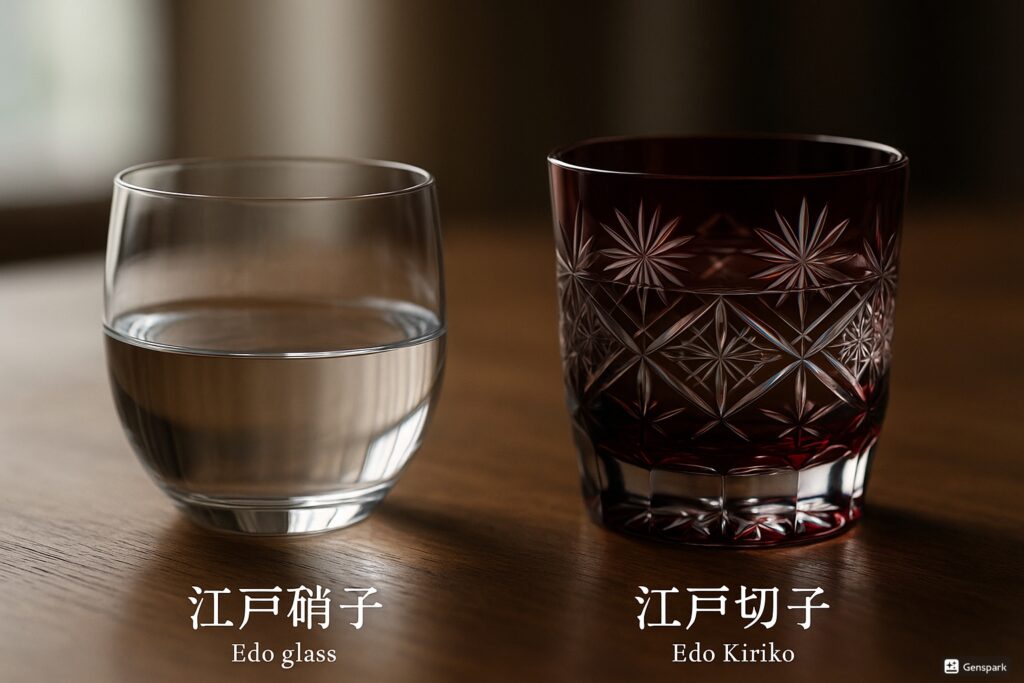
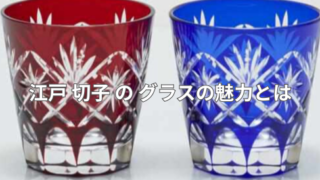
Many people tend to confuse “Edo Glass” and “Edo Kiriko,” but while they are similar, they are distinct. Simply put, Edo Glass refers to all handmade glass products made using methods that have continued since the Edo period. In contrast, Edo Kiriko refers to Edo Glass onto which delicate cuts and polishing have been applied to create patterns.
For centuries, Edo Glass has been produced in workshops in specific areas of Tokyo and Chiba that uphold the tradition of glass manufacturing. Edo Kiriko, on the other hand, refers to the technique of cutting and processing the glass, and it has been designated as a Traditional Craft by the Tokyo Metropolitan Government and the Ministry of Economy, Trade and Industry. Understanding these differences allows for a deeper appreciation of the glass products.
What is the beauty of Edo Glass?
The greatest appeal of Edo Glass lies in its warmth and unique design. Unlike mass-produced items made by machines, each piece is crafted by an artisan’s hand, giving it subtle individuality in shape, color, and the slight variations in the glass itself. This creates an irreplaceable “flavor” or “texture.”
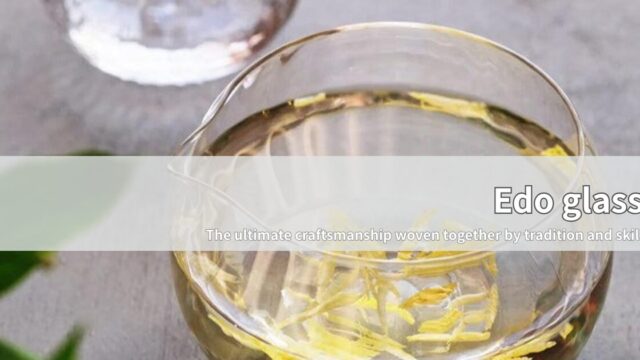
The appearance when light passes through the glass is particularly exceptional. Transparency combined with scattered gold leaf or the expression of traditional colors gives the pieces an artistic air, almost like works of art. This beauty is born from the artisan’s long-cultivated experience and sensibility, possessing a power to stimulate the viewer’s sensitivity that goes beyond a mere glass product.
The artisans’ passion and the characteristics of the glass
Edo Glass products are infused with the deep affection and passion of the artisans for their craft. They not only shape the products but also dedicate themselves to maximizing the inherent properties of the glass. For example, Kiriko artisans have praised it, saying, “It’s soft and resilient, making it easy to apply the blade and process.”
This ease of processing is a testament to the exceptionally high quality of the glass. Artisans perform the difficult task of melting the raw material, silica sand, at a high temperature of $1400^\circ\text{C}$ to bring it to the optimal state for processing. This kind of persistent effort supports the unique texture and quality of the products.
Nakakin Glass reveals: Why are the colors so beautiful?
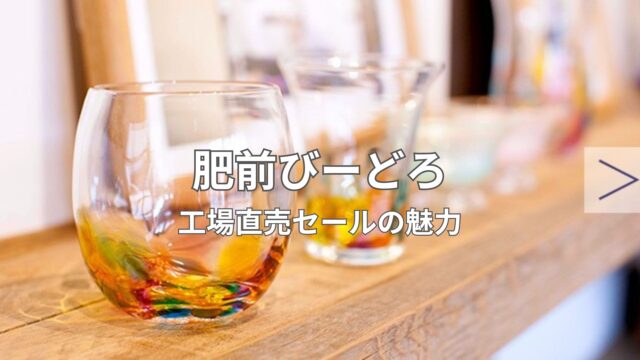
Nakakin Glass produces particularly beautiful colored glass using a technique called Irokise Garasu (cased glass), where two layers of glass are blown one over the other. This technique evolved through a unique method called the Pocan Method, devised by the company’s founder, Kingo Nakamura. This involves first blowing a layer of color glass as thin as paper, and then thermally fusing transparent glass to the inside of it.
This method creates a beautiful contrast of colors between the transparent and colored glass. Among the colors, red is particularly difficult to produce, often failing due to subtle temperature changes, making years of experience and the artisan’s intuition essential. Consequently, the deep red color often embodies the strong dedication of the artisan.
How Edo Glass is Made: Chubuki, Katabuki, and Oshigata
While there are many methods for manufacturing Edo Glass, the following three traditional techniques are primarily used. All methods involve wrapping molten glass—melted at a high temperature of about $1400^\circ\text{C}$—onto an iron rod and shaping it by hand.
- Chubuki (Free-blowing): A technique for freely shaping glass by blowing air into it without using a mold. Elegant curves and forms are created according to the artisan’s sensibility.
- Katabuki (Mold-blowing): A method where the glass material is placed into a wooden or metal mold and shaped by blowing air into it. The mold allows for the creation of products with precise shapes and unified designs.
- Oshigata (Press-molding): A technique for shaping glass by pressing it between a female and male mold. This allows for the efficient transfer of complex patterns and designs onto the glass.
These techniques demand the skill of seasoned artisans and the high level of concentration required to gauge the state of the glass in real-time. The manufacturing of stemmed glasses, known as Ashimono, is considered a particularly difficult skill that can only be mastered through many years of experience.
How good is it for daily use? Ease of use is also key.
Edo Glass not only has value as an art piece but is also practical for daily life. Its handmade warmth and comfortable weight in the hand add color to the daily dining table. However, there are precautions: since it is sensitive to sudden temperature changes, avoid pouring boiling water into it.
Also, while crystal glass is highly transparent and beautiful, it is less durable than soda-lime glass, so careful handling is important. Conversely, soda-lime glass is hard, durable, and lightweight, making it recommended for those who want to use it casually every day.
Gifting Beautiful Edo Glass: Perfect for Commemorative Items
- What is the most popular product?
- What is the most expensive color? The rare “Red”
- Where is Edo Glass made?
- Auspicious Mt. Fuji designs are beautiful for international souvenirs.
What is the most popular product?
Among Edo Glass products, glassware is especially popular. Within this category, a variety of glasses chosen to suit the type of drink are highly favored.
| Glass Type | Suitable Drink | Characteristics and Appeal |
| Rock Glass | Whiskey, Shochu | Offers a satisfying, heavy feel and the sparkle of delicate cuts. |
| Tumbler | Beer, Soft Drinks | Its tall, slender shape beautifully showcases the color of the drink. |
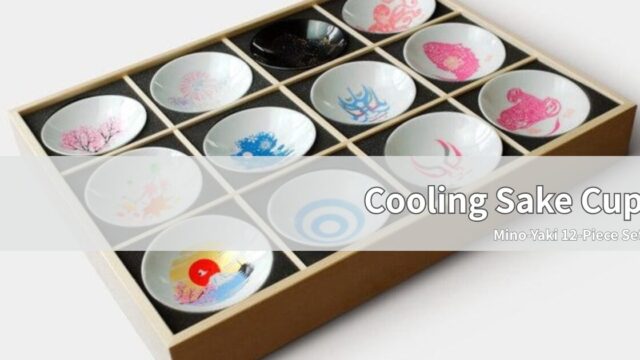
| Guinomi (Sake Cups), Cold Sake Cups | Sake | Their small, palm-sized shape is charming and enhances the flavor of the sake. |
Portable lamps and vases for hydroponic cultivation are also gaining popularity. The beauty of the glass when light passes through it and the new value of incorporating traditional crafts into a modern lifestyle are highly appreciated.
↓ You can purchase Edo Glass/Edo Kiriko and other traditional crafts from outside of Japan at BECOS!
[Official] Japan’s Largest Traditional Craft Online Store
An online shop filled with Japanese beauty that elevates your lifestyle. You will find surprisingly beautiful, handmade products including traditional crafts, high-end Japanese tableware, interior goods, accessories, ceramics, and more. Experience the beauty of Japan at BECOS…
What is the most expensive color? The rare “Red”
Edo Glass comes in various colors, including standard blue and clear, as well as yellow, green, and purple, but “red“ is considered the most difficult to manufacture and the most valuable. In particular, the deep and richly colored “Kin-Aka” (Gold Red) requires extremely delicate temperature control during manufacturing, leading to a high rate of failure.
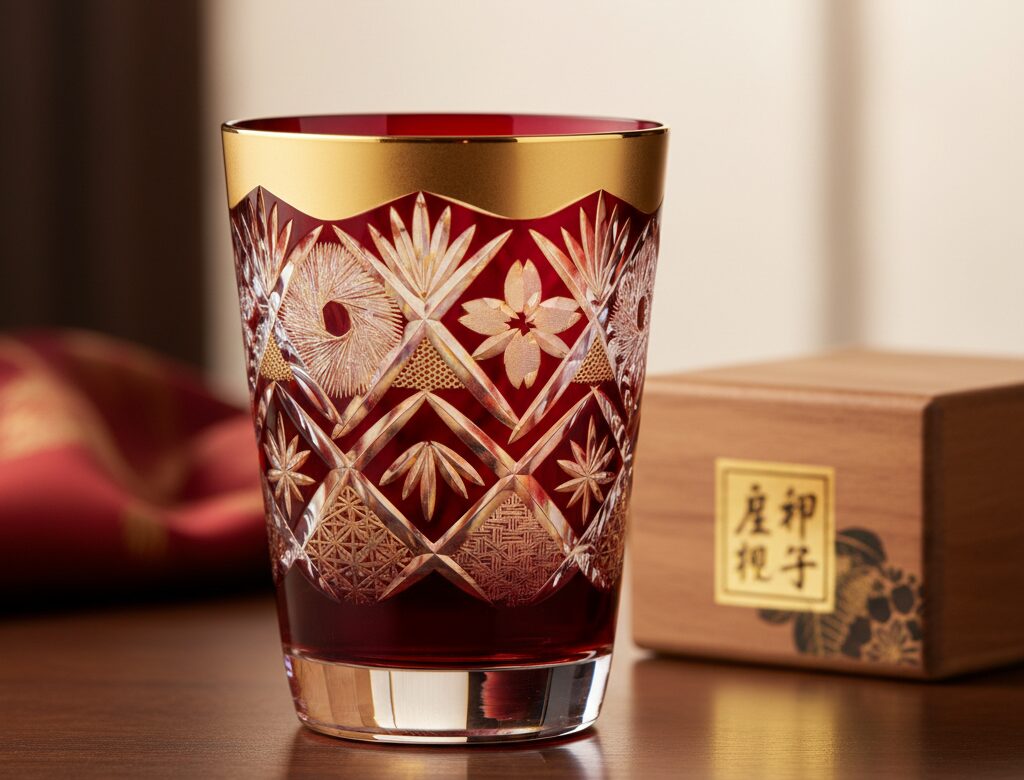
Therefore, products featuring a beautiful red color are rare and highly prized as masterpieces embodying the artisan’s mature skill, often chosen for special occasions or commemorative gifts.
Where is Edo Glass made?
Products that can be designated as Edo Glass are limited to those made in the former Edo region, which is specified by the Ministry of Economy, Trade and Industry, meaning parts of present-day Tokyo and Chiba prefectures. Specifically, areas around Edogawa Ward, Sumida Ward, and Koto Ward in Tokyo are the main production centers.
For example, Nakakin Glass Co., Ltd. has maintained its workshop in Hirai, Edogawa Ward, and has continued to uphold traditional techniques there since its founding in 1946. The name “Edo Glass” encapsulates not just the product itself, but the history and region where the technique was born.
Auspicious Mt. Fuji designs are beautiful for international souvenirs.
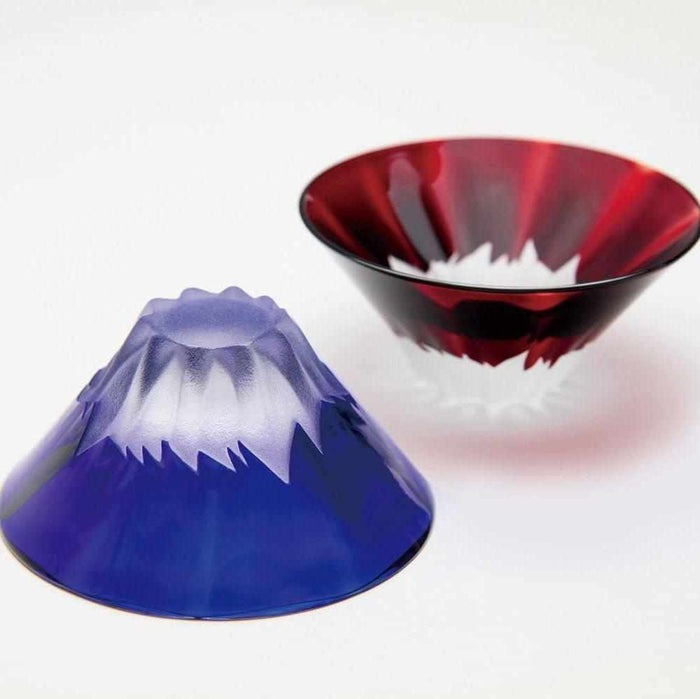
Due to their beautiful design and traditional Japanese technique, Edo Glass products are very popular as souvenirs for international visitors. Products featuring the Mt. Fuji motif are considered auspicious and are often chosen as special gifts.
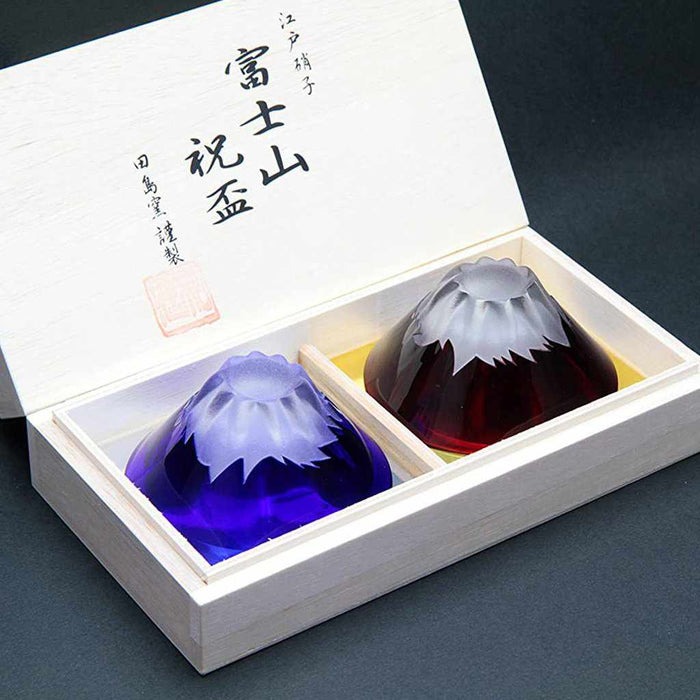
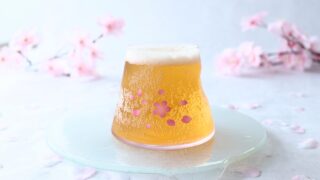
For instance, the “Guinomi Sakasa Fuji (Inverted Fuji) Series”—which reveals a fireworks pattern when viewed from directly above and the shape of Mt. Fuji when turned upside down—is highly praised for its blend of playfulness and beauty. Such designs are excellent items for conveying Japanese culture and aesthetics.
→ Edo Glass Mt. Fuji Celebration Sake Cup
Conclusion
- Edo Glass is a handmade glass product that has continued since the Edo period.
- Edo Kiriko is Edo Glass onto which cut processing has been applied.
- The Pocan Method devised by Nakakin Glass is the secret to the color’s beauty.
- The artisan’s delicate technique and long experience support the quality.
- It is made using traditional techniques such as Chubuki, Katabuki, and Oshigata.
- Soda-lime glass is recommended for daily use, and crystal glass for special occasions.
- In addition to glassware, there are various products like lamps and vases.
- The rare color, considered the most difficult to manufacture, is “Red.”
- The main production areas are parts of Tokyo and Chiba, the former Edo region.
- Mt. Fuji design products are auspicious and perfect for international souvenirs.
- Since they are handmade, no two pieces are exactly alike, and their individuality shines.
- Artisans are actively taking on new designs while preserving tradition.
- It is important to purchase from authorized dealers or reliable e-commerce sites.
This article contains promotional

Comment