


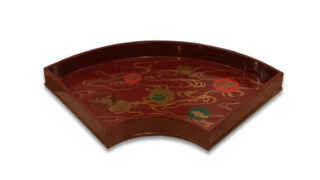
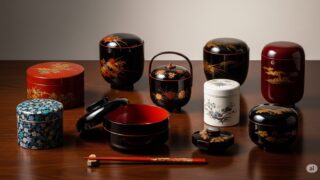
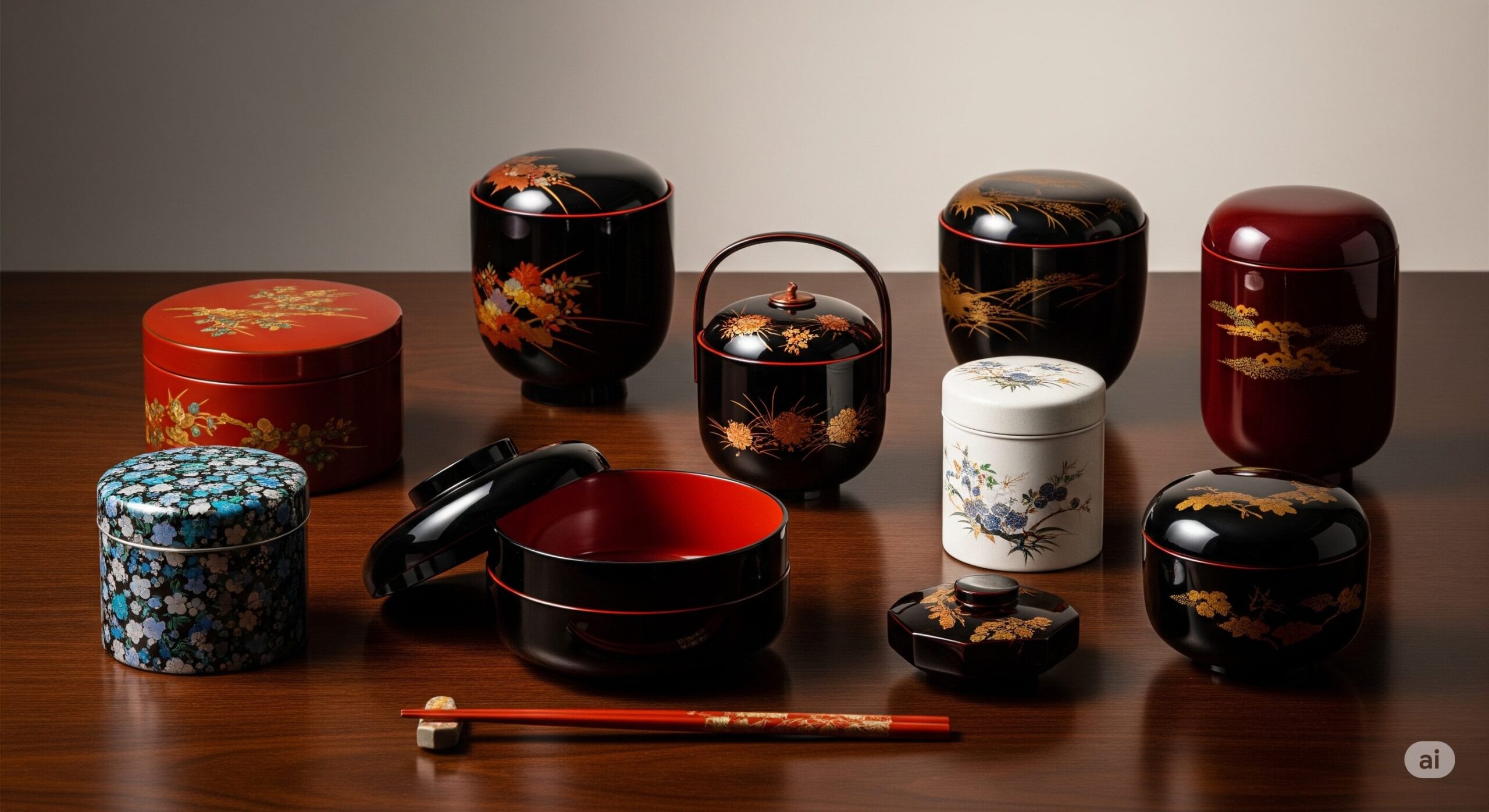
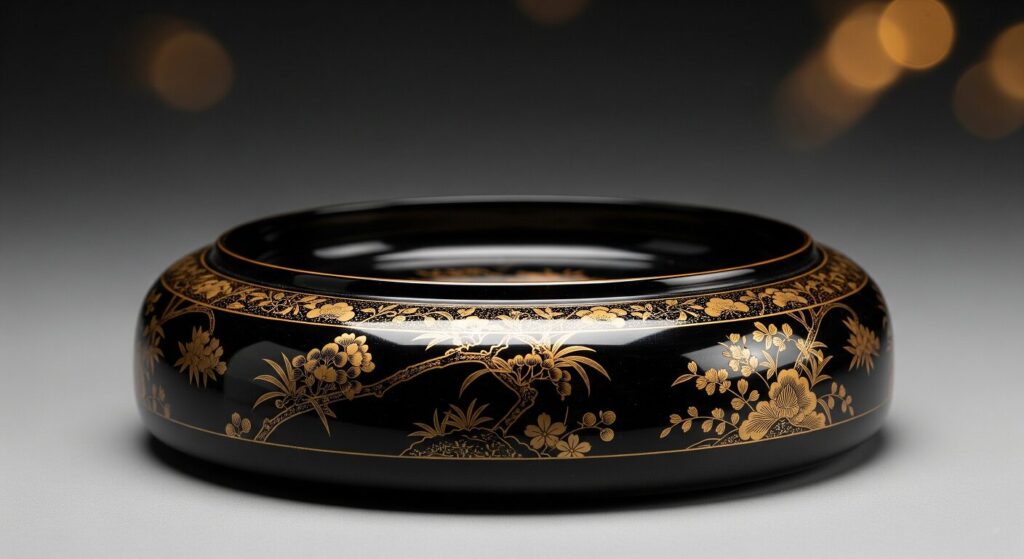
Lacquerware, a traditional craft representing Japan, is made by layering lacquer onto wood, paper, and other materials.
Lacquerware is valued not only for its beauty but also for its durability and water resistance, making it suitable for various uses such as tableware, furniture, and decorative items.
You might think it’s expensive and out of reach, unsuitable for everyday use. However, learning about Japan’s long history of lacquerware, its unique characteristics, and the various types of lacquerware passed down across Japan could significantly change that impression.
This article explains in detail the meticulous craftsmanship of lacquerware, proper care methods, the pricing of lacquerware and the reasons behind it, and ultimately conveys the importance of passing on valuable lacquerware to the next generation.
Reading this article will give you an overview of “lacquerware.”
- The Profound History and Characteristics of Lacquerware
- Lacquerware from Across Japan and Their English Readings
- The Manufacturing Process of Lacquerware and Daily Care Methods
- The Background of Lacquerware Pricing and Its Value for Long-Term Use
The Deep History and Value of Traditional Lacquerware
- Unraveling the Grand History of Lacquerware
- The Unique Characteristics of Lacquerware
- Types of Lacquerware Passed Down Across Japan
- The English Pronunciation of Lacquerware and Its Background
Unraveling the magnificent history of lacquerware
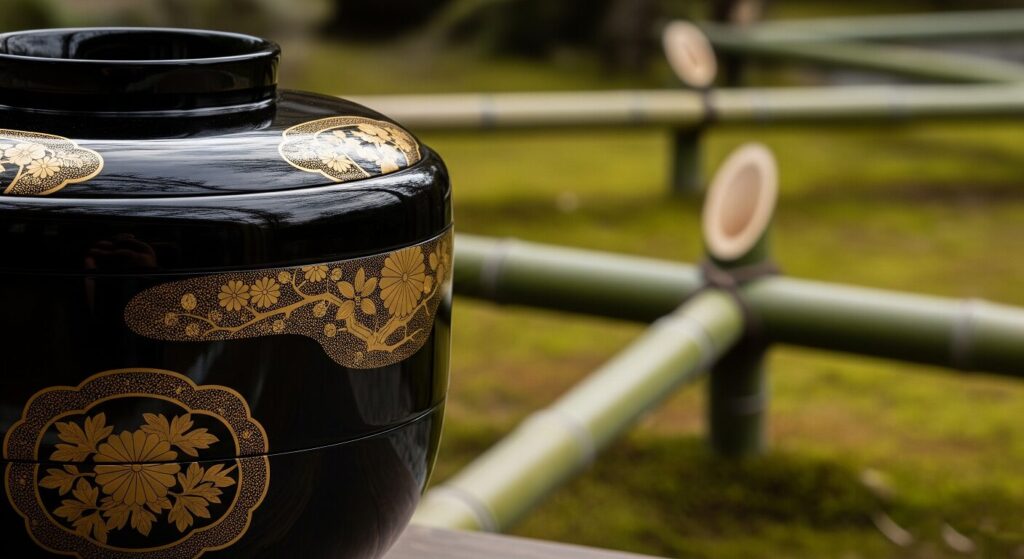
Lacquerware is one of Japan’s traditional crafts cultivated over its long history. Its origins can be traced back to the Jomon period, with lacquered ornaments excavated in Hakodate City, Hokkaido, dating to approximately 9,000 years ago and recognized as some of the world’s oldest lacquerware.
Furthermore, a lacquered branch discovered at the Torihama Shell Mound in Fukui Prefecture is estimated to be around 12,600 years old, confirming that the urushi tree was already growing in Japan during this period.
The Asuka period saw the creation of masterpieces like the Tamamushi Shrine at Horyu-ji Temple. By the Heian period, Japan’s unique maki-e technique rapidly developed. Combined with raden (mother-of-pearl inlay), it defined the subsequent direction of Japanese lacquerware design. The Kamakura period witnessed the rise of the tea ceremony, leading to the production of thin tea bowls. During the Azuchi-Momoyama period, lacquerware began to be exported overseas through Nanban trade.
During the Edo period, lacquer artisans were encouraged in each domain, with Aizu-nuri and Wajima-nuri lacquerware becoming particularly renowned. Entering the Meiji era, lacquerware developed as an export industry representing national prestige, with many lacquer artisans, including Shibata Zeshin, achieving prominence.
After World War II, a period of difficulty in passing down techniques ensued, but efforts to revitalize the craft are now underway through measures such as the designation of Living National Treasures. Thus, the history of lacquerware is deeply intertwined with the cultural and economic transformations of Japan.
The unique characteristics of lacquerware
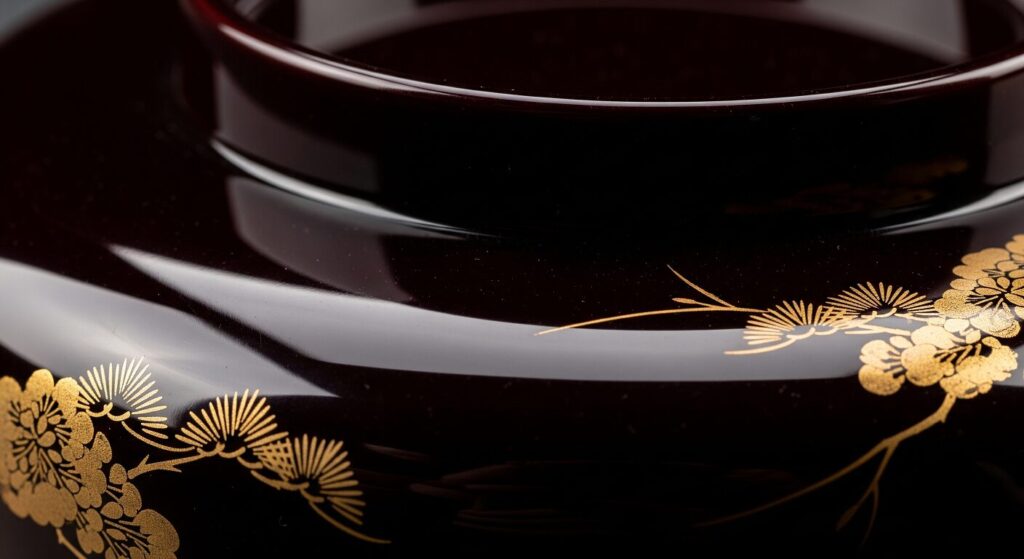
Lacquerware possesses numerous characteristics derived from the properties of its material, lacquer, and the skills of its artisans.
First and foremost is its remarkable durability. Once hardened, lacquer is highly resistant to acids, alkalis, and water, offering exceptional longevity.
This prevents wooden vessels from rotting, developing mold, or suffering termite damage, resulting in exceptionally long-lasting products. Its high durability is also evident in its use for shrines, temples, and Buddhist statues.
Next are its antibacterial, germ-killing, and insect-repelling properties. These are natural powers inherent in the components of lacquer, making it an exceptionally suitable material for food containers.
Furthermore, the longer lacquerware is used, the more its surface develops a warm, lustrous sheen. This unique charm, often described as “growing” with the user, allows one to enjoy its aging process over time.
Furthermore, the richness of expression in lacquerware is distinctive. Various decorative techniques exist, such as those that highlight the wood grain like Kiso Shunkei, or those that apply geometric or three-dimensional patterns like Kiso Taisho or Nuriwake Roiro-nuri.
These techniques are meticulously applied one by one through the skilled craftsmanship of artisans, giving each piece unique artistic value as one-of-a-kind works of art.
Types of Lacquerware Found Throughout Japan
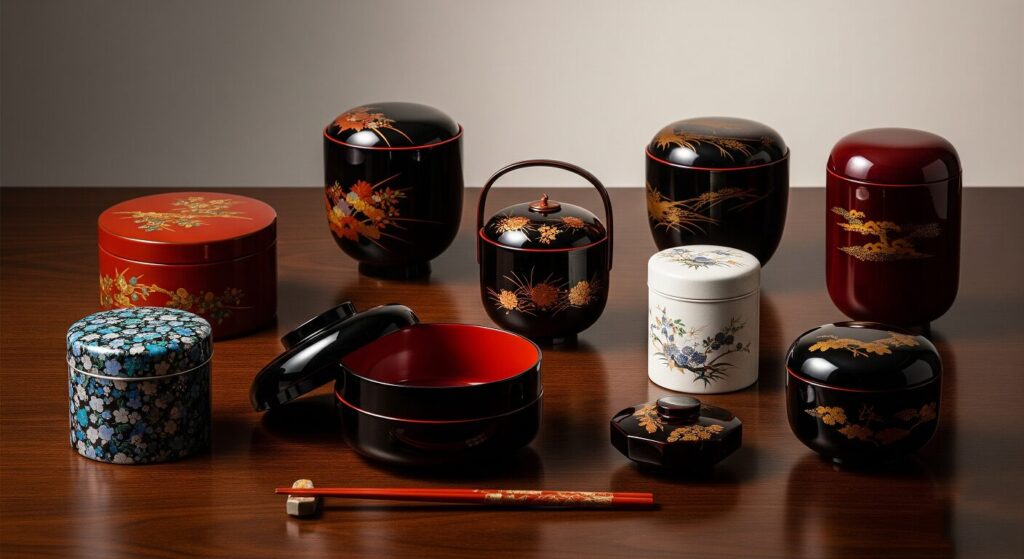
Japan boasts a diverse array of lacquerware, shaped by each region’s climate, historical background, available timber species, and unique techniques. Each production area has inherited distinct methods and characteristics, and understanding these differences is key to appreciating the depth of lacquerware.
For example, Kiso lacquerware, produced in and around Shiojiri City, Nagano Prefecture, benefits from the region’s high elevation of approximately 900 meters above sea level. The extremely cold winters are ideal for lacquering work.
It utilizes locally sourced high-quality woods like cypress, katsura, and oak, and features distinctive techniques such as Kiso Shunkei, Kiso Taisho, and Tsuburi Rōiro-nuri.
Wajima lacquerware from Ishikawa Prefecture is renowned for its sturdy construction and elegant maki-e designs, particularly featuring a base layer mixed with diatomaceous earth known as “ji no ko.”
Aizu lacquerware from Fukushima Prefecture is characterized by its wide variety and robust pieces, many adorned with beautiful painted designs.
Tsugaru lacquerware from Aomori Prefecture undergoes so many processes it’s nicknamed “baka-nuri” (foolish lacquering), resulting in its unique patterns.
Beyond these, numerous lacquerware production areas exist, each radiating its own unique charm: Kawanobe lacquerware from Akita Prefecture, Hidehira-nuri and Jōbōji-nuri from Iwate Prefecture, Murakami woodcarving and tsuishu lacquerware from Niigata Prefecture, Takaoka lacquerware from Toyama Prefecture, Echizen lacquerware from Fukui Prefecture, and Kishū lacquerware from Wakayama Prefecture.
These lacquerwares are precious entities that convey the culture and traditions rooted in their regions to the present day.
The English Pronunciation of Lacquerware and Its Background
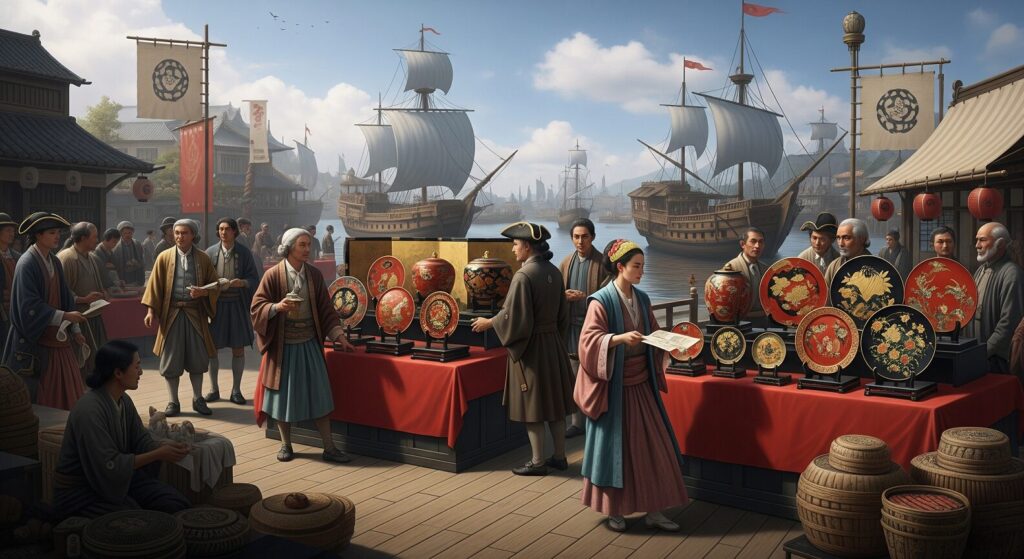
There are several English expressions for lacquerware, but the most commonly used is “lacquerware.” This term refers to all products coated with lacquer, including those coated with chemical paints. Therefore, it is important to note that it may not always accurately represent traditional Japanese lacquerware.
On the other hand, the word “Japan” can sometimes refer to lacquerware. This originates from the 16th to 17th centuries when beautiful Japanese lacquerware was exported to Europe through the Nanban trade and became highly prized.
In Europe at that time, lacquerware was Japan’s representative export, and its magnificence led to “japan” being used as a word to refer to Japan itself.
However, in modern times, ‘japan’ primarily means “Japan,” so when referring to Japanese lacquerware, expressions like “Japanese lacquerware” or “Japanese traditional lacquerware” are considered more appropriate.
Additionally, in Mexico, lacquerware is called “Maque” in Mexican Spanish, which is said to derive from the Japanese term “makie” (Tokie). This term’s origin is traced to Japanese lacquerware being brought to Mexico through Nanban trade.
This demonstrates that Japanese lacquerware has long been highly valued internationally, and its culture and techniques have influenced regions worldwide.
Why Expensive Lacquerware Endures as a Beloved Treasure
- The Careful Crafting of Lacquerware
- Proper Care Methods for Lacquerware
- The Price of Lacquerware and Why
- Passing Valuable Lacquerware to the Next Generation
The Careful Crafting of Lacquerware
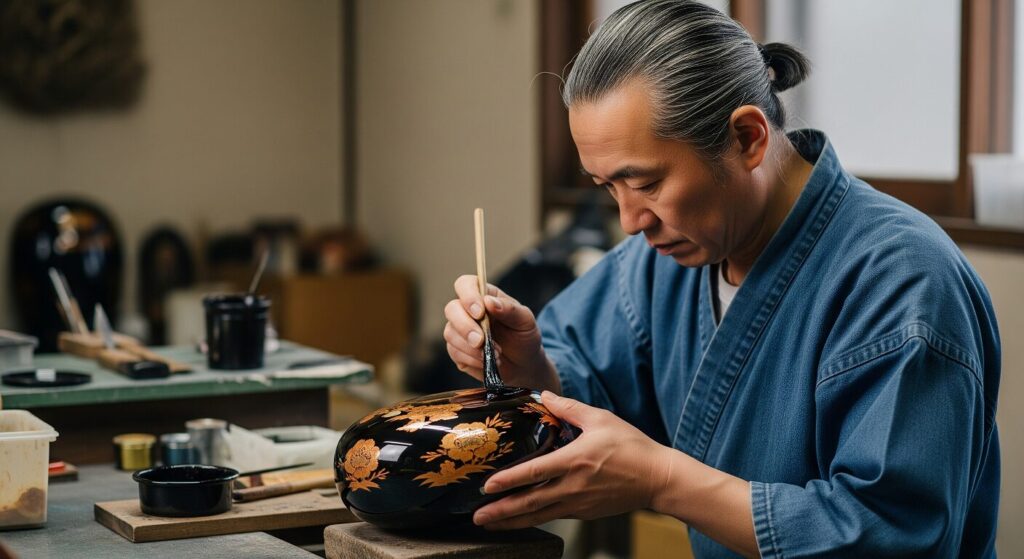
The secret to why lacquerware is so remarkably durable and beautiful lies in its painstakingly meticulous craftsmanship, requiring an almost unimaginable amount of time and effort. The production process for lacquerware is multifaceted, with each step supported by the skilled techniques of master artisans.
The first step is woodworking. This crucial process shapes the vessel that will become the lacquerware, requiring the selection of naturally dried, sturdy wood. Katsura, horse chestnut, and cypress are the primary materials, but selecting the optimal wood according to the finished piece’s size and shape is crucial.
It is no exaggeration to say that the quality of subsequent processes hinges on the woodworker, known as a kiji-shi, finishing the piece without warping and to precise dimensions.
Next comes the base preparation. Though this part becomes invisible once complete, it is an extremely important process that determines the lacquerware’s durability and usability. A mixture of rice flour and raw lacquer, called “kokusho,” is applied to fill gaps and smooth out unevenness.
A base lacquer, made by mixing rust clay and raw lacquer, is then carefully applied. While some techniques, like Kiso Shunkei, skip the base layer and instead repeatedly rub raw lacquer into the wood, in most cases, this base preparation is key to extending the lifespan of the lacquerware.
Subsequent steps include the intermediate coating and colored lacquer coating. The process of applying lacquer, allowing it to dry, and then polishing is repeated multiple times.
The colored lacquer coating, in particular, involves layering colored lacquer multiple times, sometimes requiring the same process to be repeated over twelve times.
Achieving an even, beautiful finish while taking the utmost care to prevent dust contamination demands high concentration and extensive experience.
Additionally, decorative techniques like maki-e, shinkin, or raden may be applied. These embellishments enhance the beauty of the lacquerware. For example, in hira-maki-e, a design is drawn with lacquer, then gold powder is sprinkled over it.
This is followed by another layer of lacquer to set it, and finally, the piece is polished to completion—a complex process. After undergoing these steps, lacquerware takes anywhere from several months to over a year to finally be completed.
Proper Care for Lacquerware
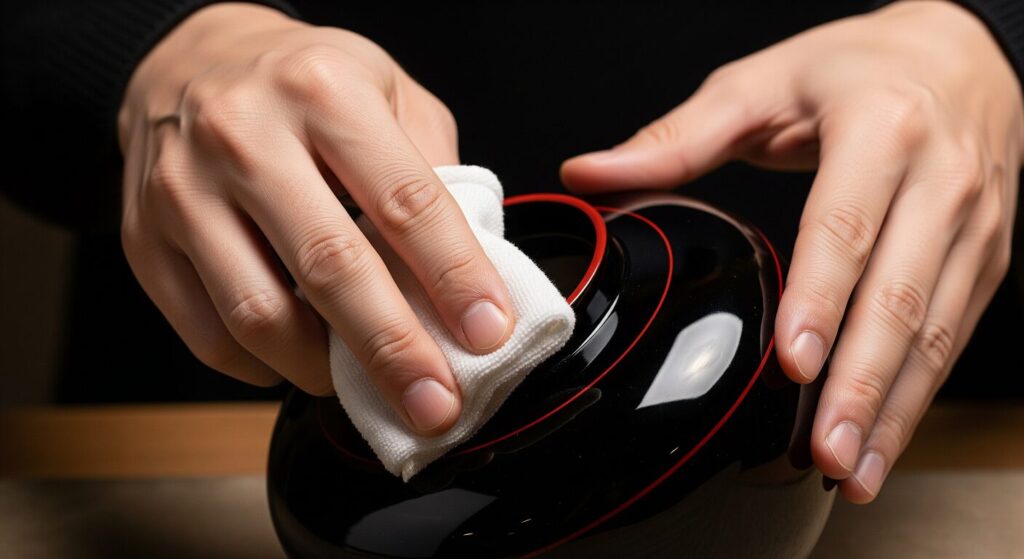
Lacquerware may seem delicate, but with proper care, it can last for many years. However, improper care can damage your cherished pieces, so caution is necessary.
For daily use, it’s important to wash items with warm or lukewarm water after use and gently wipe them dry with a soft cloth. Avoid using hard sponges, scouring pads, or abrasive detergents, as these can scratch the lacquer surface.
Using dishwashers or microwaves is also not recommended, as they accelerate deterioration. Lacquer is sensitive to heat, and sudden temperature changes or drying can cause cracking or peeling.
Careful storage is also essential. Avoid storing lacquerware in extremely humid or dry locations, or in direct sunlight. The ideal storage environment is one with stable temperature and humidity.
For example, placing it in a wooden box or wrapping it in a soft cloth can protect it from external impacts and environmental changes.
Even if a lacquerware piece gets scratched or the lacquer peels off, many items can be repaired. By entrusting it to a skilled artisan, it can be restored to its former beauty.
The repair marks themselves become part of the piece’s history, adding character, allowing you to continue cherishing and using it. Proper care is essential for enjoying lacquerware for a long time and preserving its beauty.
The Price of Lacquerware and Why
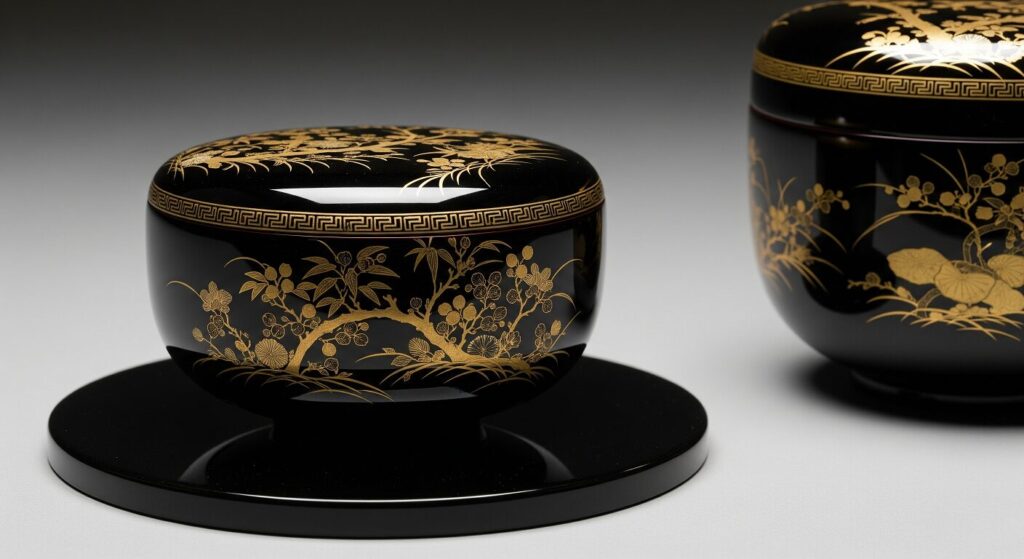
Many people likely find lacquerware to be relatively expensive. A single bowl can cost tens of thousands of yen, which may surprise you. However, there are clear reasons for this price, closely tied to lacquerware being a traditional craft with enduring value.
First, mass production is difficult. As mentioned earlier, the production process involves numerous steps, taking several months to over a year from shaping the wood to completion.
Since many steps are done by hand by artisans, an enormous amount of time and labor is invested in each individual piece. Furthermore, becoming a fully skilled lacquerware artisan requires a long apprenticeship period, demanding tremendous effort and experience to master the techniques.
It is only natural that the costs of labor and the time required for production are reflected in the product price.
Next, the high cost of materials is another reason. Lacquer, the primary material for lacquerware, is extremely expensive. Currently, the amount of lacquer produced domestically in Japan is very small, with most relying on imports from countries like China.
Domestic raw lacquer is said to cost around ¥100,000 per kilogram, making it extremely rare and valuable. Compared to Chinese raw lacquer, domestic lacquer is also said to be superior in terms of hardness and durability.
Furthermore, the domestic natural woods used for the base, such as zelkova, horse chestnut, and cypress, are also expensive due to limited resources.
Furthermore, lacquerware featuring luxurious decorations like gold powder incurs even higher material costs and demands highly skilled craftsmanship, further driving up the price. These factors combine to make lacquerware expensive.
However, considering its durability—lasting decades or even over a century—and the character that deepens with use, it can be seen as a product offering excellent cost performance from a long-term perspective.
Passing on valuable lacquerware to the next generation
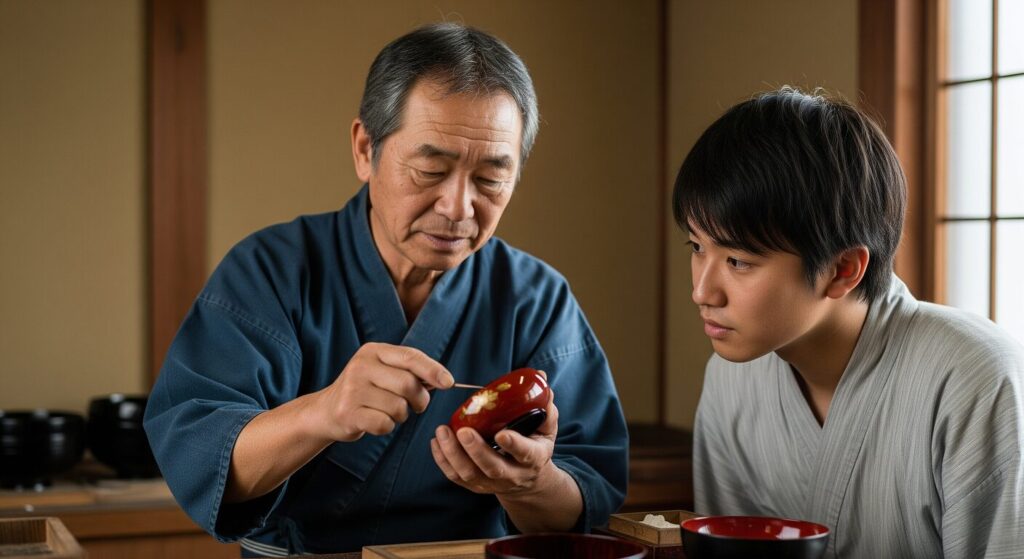
Lacquerware is more than mere tableware or furnishings. It embodies the bounty of Japan’s rich natural environment, the skills of artisans passed down through generations, and a culture cherished for centuries.
While lacquerware may seem expensive, understanding the immense time, labor, and value of rare materials behind it makes its price entirely reasonable.
Beyond its functional aspects like antibacterial properties and durability, the beauty of lacquerware deepens and gains character with use. In today’s mass-production, mass-consumption society, this quality is being reevaluated. The fact that it can be repaired and used long after being scratched embodies Japan’s culture of valuing possessions.
Additionally, preserving the skills of the artisans who create lacquerware is a major challenge. The decline in lacquer tree tappers and the training of young artisans will determine the future of lacquerware culture.
As consumers, choosing lacquerware means more than just purchasing a product; it also supports passing on these techniques and culture to the next generation.
Lacquerware designs and uses adapted to modern lifestyles are increasing, making it more accessible. Why not take this opportunity to pick up a piece of lacquerware? The unique story that unfolds between you and your lacquerware will surely enrich your daily life.
To pass on the valuable tradition of lacquerware reading to the next generation
This article has explored the profound depth of lacquerware, a traditional Japanese craft.
- Lacquerware boasts a long history dating back to the Jomon period.
- Its durability, antibacterial properties, and insect-repellent effects stem from lacquer’s natural components.
- Diverse lacquerware exists across Japan, including Kiso lacquerware.
- English terms for lacquerware include lacquerware and Japan.
- Creating lacquerware involves numerous processes and considerable time, from wood preparation to coating and decoration.
- The quality of the product is supported by the skilled techniques and meticulous effort of the artisans.
- Proper care for lacquerware involves gently washing it with lukewarm water and a soft cloth.
- Use of dishwashers and microwaves should be avoided.
- Lacquerware can be repaired and used for a long time.
- The price of lacquerware stems from the time-consuming manual labor and the use of expensive materials.
- Domestic lacquer is particularly rare and costly.
- However, in the long term, it offers excellent value for money.
- Lacquerware is not merely a vessel, but the crystallization of Japanese culture and craftsmanship.
- Choosing lacquerware also supports the preservation of artisans and techniques.
- Lacquerware adapted to modern lifestyles is also increasing.
- Lacquerware gains character and deepens affection the more it is used.
- By cherishing and continuing to use lacquerware, its value increases over time.
- 漆器は使うほどに風合いが増し、愛着がわく
- 漆器は大切に使い続けることで、その価値を増していく
Comment