


Mino ware is a type of pottery deeply rooted in our daily lives, accounting for over 50% of Japan’s domestic ceramic production. However, many may not know where Mino ware is made, its history, how to read its name, or even its English pronunciation. This article explores the roots and 1,300-year history of Mino ware while providing a comprehensive overview of its types.
We’ll also explain the secrets behind its distinctive texture, lightness, beauty, and colors, along with the materials and clay used for Mino ware in Gifu. Furthermore, touching on various aspects of Mino ware—such as where to buy it, event information, and an anecdote about Princess Kako wearing Mino ware earrings—we’ll discuss its advantages and disadvantages. We’ll also cover why buying directly from kilns or factories is more economical, how to access museums to learn about Mino ware’s history, and information about museum shops.
At the end of this article, we summarize where Mino ware is produced in Gifu. This concludes our information to help readers gain a deeper understanding of and enjoyment in Mino ware.
- The Main Production Areas and Historical Evolution of Mino Ware
- The Diverse Types of Mino Ware and Their Distinctive Features
- The Appeal of Mino Ware and Where to Purchase or Experience It
- The Benefits and Considerations of Mino Ware in Daily Life
- Where is Mino ware produced? Introducing the main production areas
- The Roots of Mino Ware and Its 1,300-Year History
- How to read Mino ware and its English pronunciation
- Discover the Styles at a Glance! Representative Mino Ware Designs
- What are the characteristics of Mino ware? Its rough texture and lightness are also appealing.
- Uncovering the Beauty and Secrets of Mino Ware’s Colors
- Materials and Clay Used in Mino Ware
- Where can I buy Mino ware? Where to buy and event information
Where is Mino ware produced? Introducing the main production areas
- The Roots and 1300-Year History of Mino Ware
- How to Read Mino Ware: Pronunciation and English Transliteration
- Discover the Styles at a Glance! Representative Types of Mino Ware
- What Makes Mino Ware Unique? Its Rough Texture and Lightweight Appeal
- Uncovering the Secrets Behind Mino Ware’s Beauty and Colors
- Materials and Clay Used in Gifu’s Mino Ware
The Roots of Mino Ware and Its 1,300-Year History
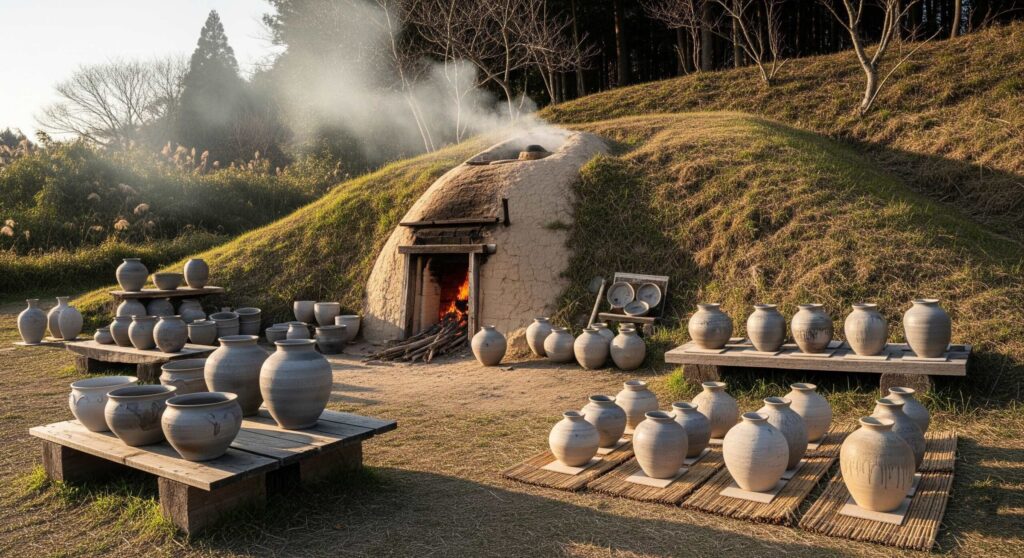
The history of Mino ware dates back over 1,300 years to the Heian period. During this era, the technique for producing Sue ware was introduced from the Korean Peninsula, leading to the creation of pottery using potter’s wheels and pit kilns. This is considered the origin of Mino ware. By the late Heian period, production shifted from glazed ceramics known as white porcelain to unglazed mountain tea bowls for the general public, with sales expanding as far as the Tohoku region.
During the Muromachi period, single-chamber kilns called “large kilns,” built on mountain slopes, came into use, producing pottery with ash glazes and iron glazes. Then, entering the Momoyama period, alongside the popularity of the tea ceremony, highly artistic tea ceramics were created one after another under the guidance of Sen no Rikyū and Furuta Ōribe. It was during this era that uniquely Japanese styles such as Shino, Ōribe, Kōseto, and Seto-kuro were established.
The Edo period saw the adoption of multi-chamber climbing kilns, enabling full-scale mass production of tableware for daily use. By the late Edo period, production of white, hard porcelain began, and it circulated nationwide. Today, it has developed into a major production area, accounting for over 50% of Japan’s total pottery output and over 60% of its Japanese tableware.
How to read Mino ware and its English pronunciation
Mino ware is pronounced “Mino-yaki.” The kanji ‘美濃’ (Mino) originates from the name of the ancient province corresponding to the southern part of present-day Gifu Prefecture. This ancient Mino Province included what are now Toki City, Tajimi City, Mizunami City, Kani City, and others. The English terms for Mino ware are “Mino-yaki” or “Mino ware.” Since it is widely recognized overseas as Japanese ceramics, these terms are frequently used.
Incidentally, ash glaze fired during the Heian period was read as “kaiyū,” but ash glaze from the Kamakura and Muromachi periods onwards is read as “haiyū.”
Discover the Styles at a Glance! Representative Mino Ware Designs
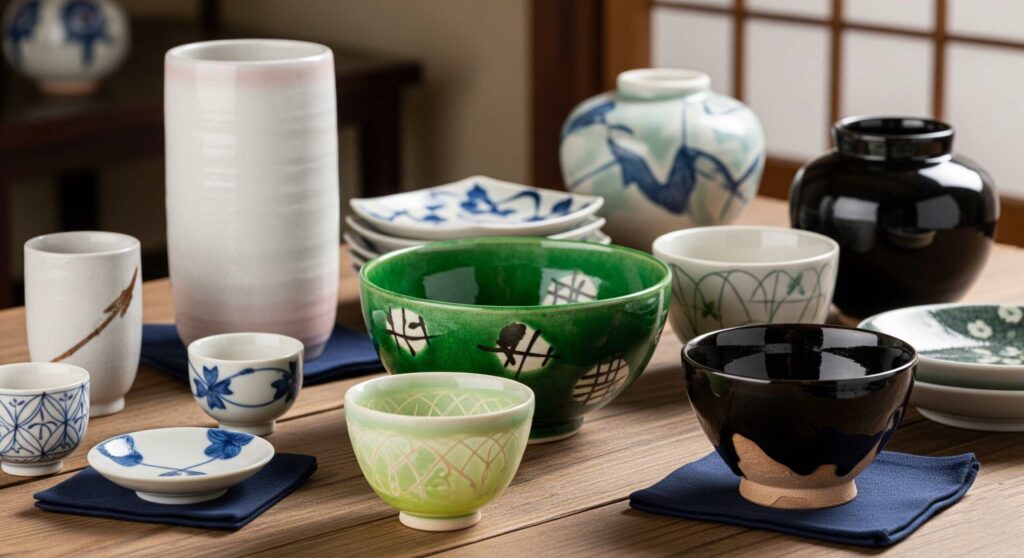
Mino ware boasts 15 distinct styles designated as Traditional Crafts by the Minister of Economy, Trade and Industry. Among these, the most representative are “Shino, Oribe, Kiseito, and Setoguro,” established during the Momoyama period. Their respective characteristics are as follows:
| 種類 | 特徴 |
|---|---|
| Shino | Characterized by its soft, milky white glaze, its charm lies in its fine crackle patterns and subtle pinkish hue. It was the first in Japan to feature brush-painted patterns. |
| Oribe | Known for its deep green glaze, “Oribe glaze.” It often features bold, innovative designs, with distinctive distorted shapes and brush-painted patterns. |
| Kizeto | Characterized by a pale yellowish-brown glaze, its charm lies in its simple, unassuming atmosphere. It may occasionally feature partial green patterns. |
| Setoguro | Characterized by a jet-black luster. It is made using the “hikidashi-kuro” technique, where the pieces are pulled out of the high-temperature kiln during firing and rapidly cooled. |
What are the characteristics of Mino ware? Its rough texture and lightness are also appealing.
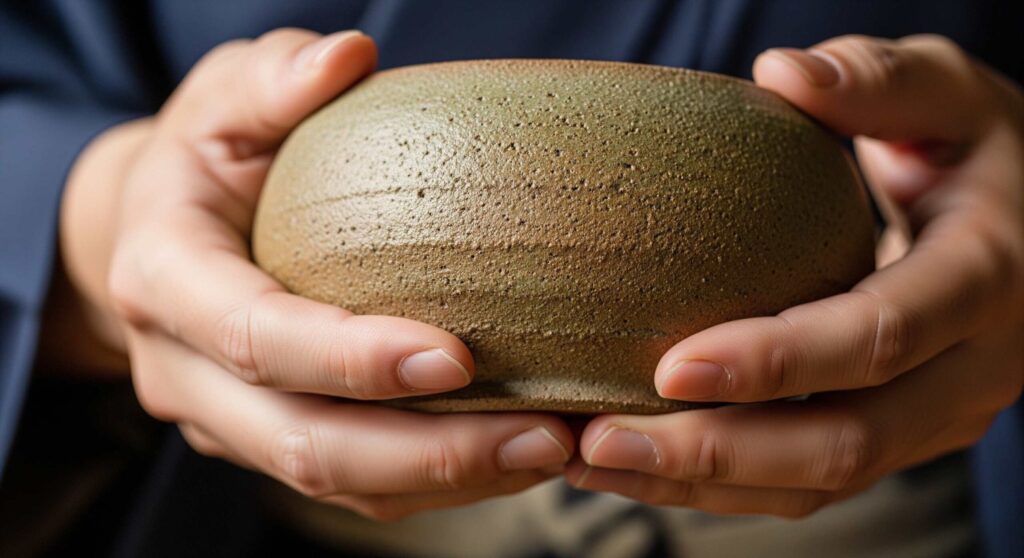
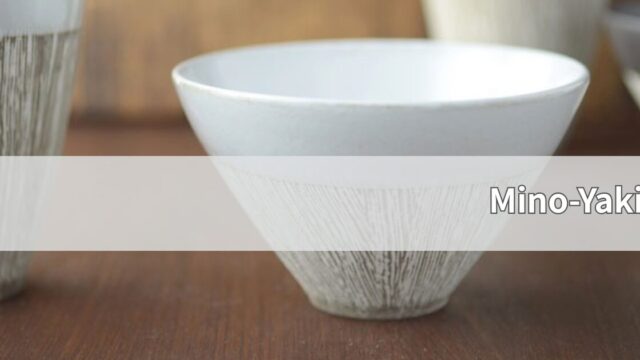
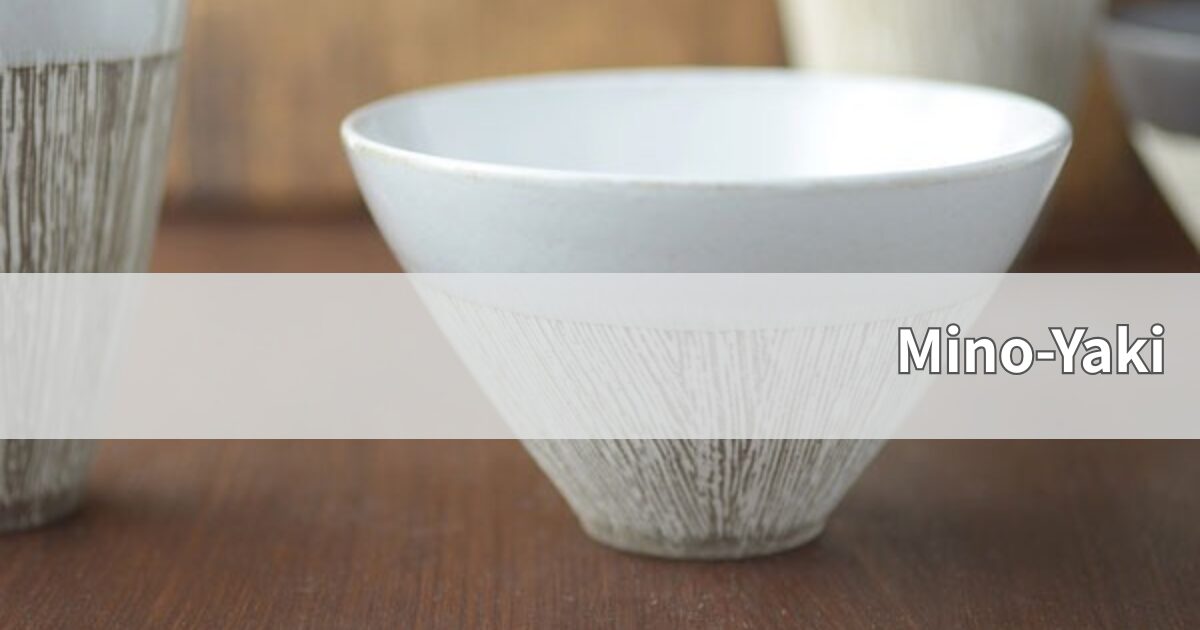
Mino ware is said to have “no defining characteristic as its defining characteristic,” boasting an incredibly diverse range of techniques and designs. Consequently, Mino ware encompasses a vast array of vessels. For instance, you’ll find warm pottery retaining the earthy texture of its clay, alongside white, hard, and smooth porcelain.
Furthermore, since it is made with everyday use in mind, it is designed to feel comfortable in the hand and pursue lightness. This allows it to blend seamlessly into any dining table, enriching daily life.
Uncovering the Beauty and Secrets of Mino Ware’s Colors
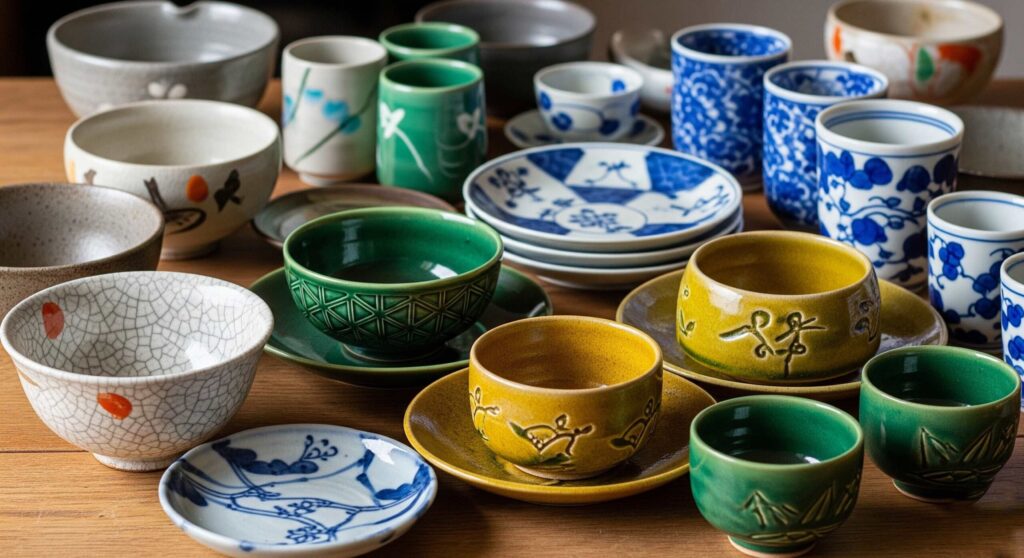
The beauty and colors of Mino ware are created through diverse glazes and firing techniques. For example, the milky white of Shino ware comes from the “Shino glaze,” primarily composed of feldspar.
The deep green of Oribe ware is achieved with “Oribe glaze,” whose hue subtly changes depending on the kiln conditions during firing.
The pale yellow of Kizeto comes from yellow glaze, while its partial green hues utilize natural copper sulfate.
Furthermore, the glossy jet black of Setoguro is achieved by removing iron glaze from a high-temperature kiln and rapidly cooling it.
In this way, by combining various glazes and techniques, Mino ware expresses an almost infinite range of colors and beauty.
Materials and Clay Used in Mino Ware
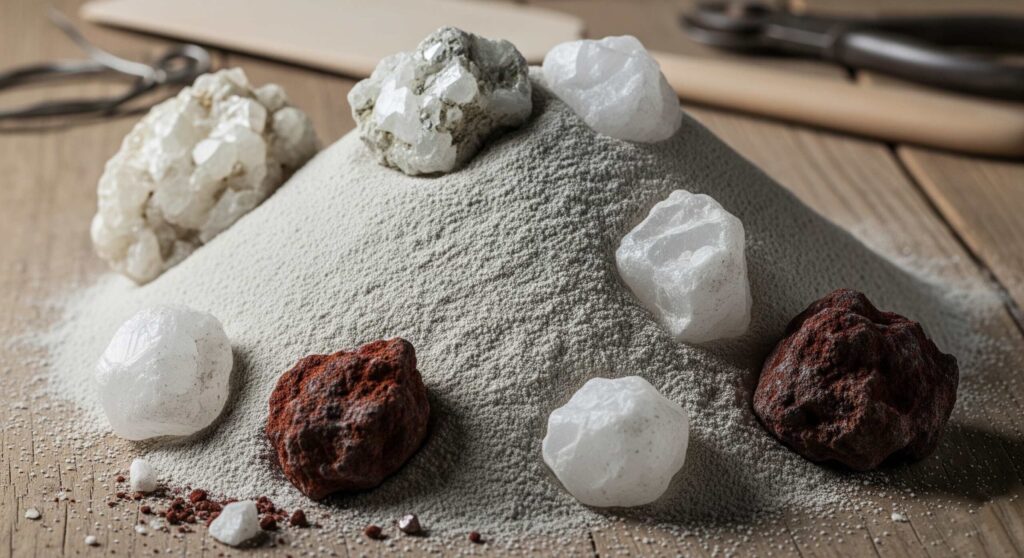
Gifu Prefecture is also known as a source of pottery clay, the primary raw material for Mino ware. The Tōnō region, the main production area, is rich in clay, feldspar, and silica stone used as raw materials for ceramics, supporting the production of Mino ware. Pottery is primarily made from clay, while porcelain is created by mixing clay with feldspar, silica stone, and other materials.
While concerns about clay depletion exist due to the long history of large-scale pottery production, it is precisely these high-quality materials that enable the diverse styles of Mino ware.
Where can I buy Mino ware? Where to buy and event information
- Advantages and Disadvantages of Mino Ware
- Purchasing Mino Ware Directly from Kilns and Retail Outlets Offers Great Value
- Access Methods to Experience Mino Ware History at the Museum
- Discover Your Favorite Piece at the Museum Shop
- Princess Kako Wearing Mino Ware Earrings
- Where Mino Ware is Produced in Gifu: A Summary
Advantages and Disadvantages of Mino Ware
First, the greatest advantage of Mino ware is its overwhelming diversity and affordability. Because it lacks a fixed style, it offers a wide range of designs and colors, from Japanese tableware to Western-style dishes, making it easy to find pieces that suit your taste.
Furthermore, its mass production means it can be purchased at a lower price compared to other traditional crafts, which is a major appeal. It’s so readily available that you can even find Mino ware dishes sold at dollar stores.
On the downside, this very diversity might sometimes make it feel “lacking in distinctiveness.” If you expect a specific style or technique, like you might find in pottery from other regions, you might feel it falls short.
Furthermore, while many products are affordable, the quality difference between budget items and high-end pieces can sometimes be quite noticeable. When purchasing, it’s important to check not just the price, but also the feel and texture of the piece.
Mino ware spans a wide price range, from everyday tableware to art pieces. This isn’t to imply poor quality, but it’s advisable to understand that quality varies according to price when making your selection.
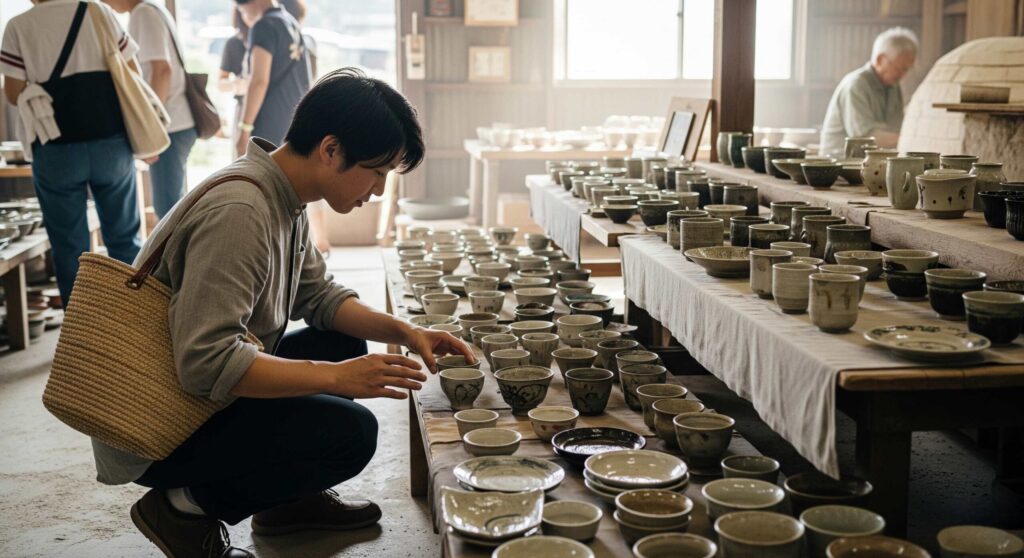
Buying directly from Mino ware outlets or kilns is a great deal.
Toki City, a major production center for Mino ware, is home to “Oribe Hills,” a commercial complex where Mino ware wholesalers are concentrated. Here, you can find direct sales stores run by wholesalers and warehouse sales events, allowing you to purchase high-quality pottery at reasonable prices.
Additionally, many individual kilns also sell directly, offering a wide range of tableware from the unique works of young artists to traditional Mino ware.
Furthermore, every year during Golden Week, the Toki Mino Ware Festival is held, standing alongside the Arita Pottery Market in Saga Prefecture and the Seto Pottery Festival in Aichi Prefecture. This event gathers over 300 exhibitors, featuring wholesale and manufacturer tent markets, as well as craft exhibitions by artists.
Visiting during this period offers the valuable experience of hunting for hidden gems and speaking directly with the artists themselves.
How to Access the Museum to Experience the History of Mino Ware
For those wishing to delve deeper into the history and culture of Mino ware, the Tajimi City Mino Ware Museum is highly recommended. Here, you can explore the history of Mino ware and view works by Living National Treasures, offering a multifaceted learning experience about the appeal of Mino ware.
| Facility Name | Tajimi City Mino Ware Museum |
|---|---|
| Location | 1-9-27 Higashimachi, Tajimi City, Gifu Prefecture |
| Access | Public Transportation: Approximately 20 minutes by Kikyō Bus (Oliver Route) from JR Tajimi Station. Get off at the “Mino Yaki Museum Mae” bus stop (runs only on Saturdays, Sundays, and holidays). By Car: Approximately 10 minutes by car from Toki Minami-Tajimi IC on the Tokai Kanjo Expressway. |
| Opening Hours | 9:00 AM – 5:00 PM (Last admission at 4:30 PM) |
| Closed | Mondays (If Monday is a holiday, closed the following weekday) |
| Admission Fees | Adults: 320 yen, University Students: 210 yen, High School Students and younger: Free |
Find your favorite piece at the museum shop
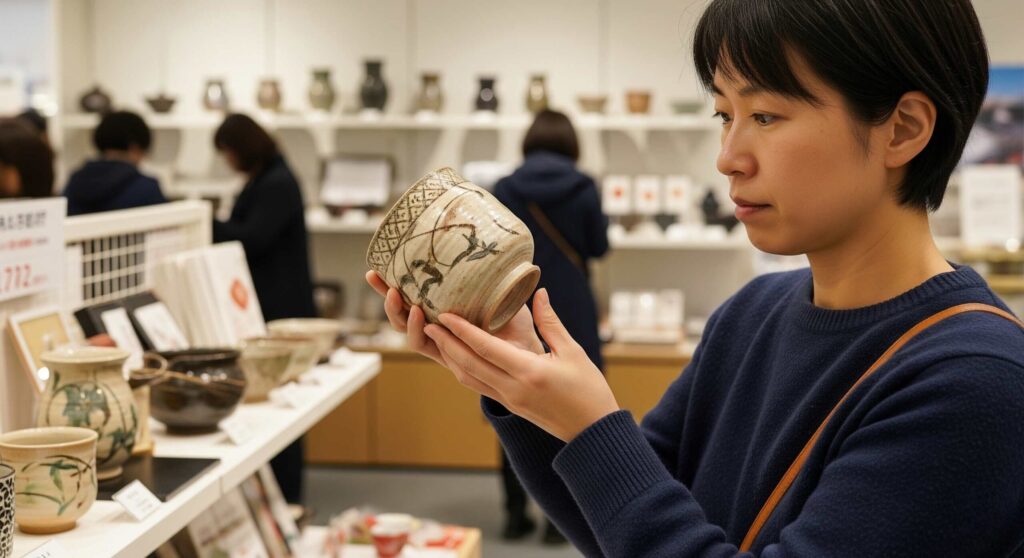
At the Tajimi City Mino Ware Museum, you can not only enjoy viewing the exhibits but also purchase Mino ware at the adjoining museum shop. Here, a wide variety of tableware is available for sale, ranging from traditional Mino ware to pieces featuring contemporary designs. You can pick items up to feel their texture and weight, helping you find that perfect piece. Additionally, works by individual artists are sometimes available, offering the chance to discover a truly unique piece just for you.
Princess Kako wearing Mino ware earrings
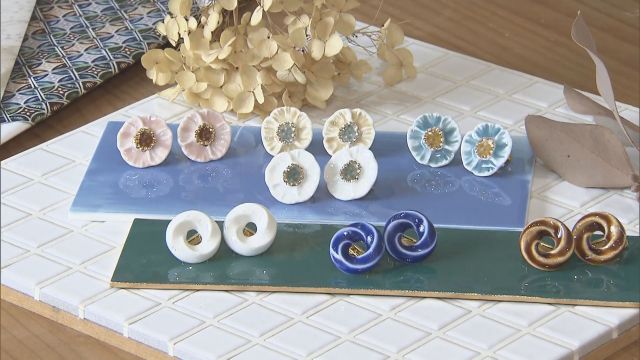
Mino ware is gaining attention not only as tableware but also as accessories. In fact, it became a hot topic when Princess Kako, the second daughter of Prince and Princess Akishino, wore Mino ware earrings during their visit to Gifu Prefecture in May 2025. These earrings were products from “Shichikama-sha,” a brand developed by a tile manufacturer in Tajimi City, specifically the ‘Kururi’ and “Yuka” designs.
Following this news, online shops saw orders surge to over five times their usual volume, generating significant buzz. This serves as an example of how traditional Mino ware techniques are being applied to contemporary fashion items.
Where Mino Ware Is Made: A Summary
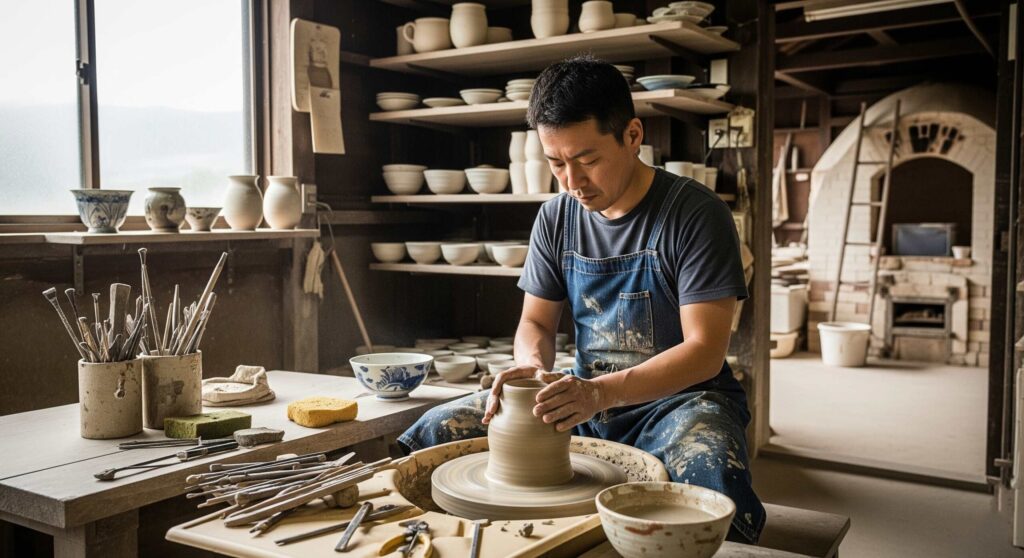
This article has provided a detailed explanation of where Mino ware is produced in Gifu, along with its history and appeal. Finally, we summarize the key points of this article in a list.
- Mino ware is produced in the Tōnō region of Gifu Prefecture (including Toki City, Tajimi City, Mizunami City, and Kani City).
- Its history began over 1,300 years ago, with its unique style established during the Momoyama period.
- Pronounced “Mino-yaki,” it is known as Mino ware in English.
- It encompasses a diverse range of styles, with 15 distinct types designated as Traditional Crafts.
- Among these, Shino, Oribe, Kiseito, and Setoguro are the most representative styles.
- Its design spectrum is so broad it’s often described as “having no defining characteristic as its defining characteristic.”
- Textures vary widely, from rough and grainy to smooth porcelain.
- Many pieces are lightweight, designed for everyday use.
- The clay used is mined in the Tōnō region of Gifu Prefecture.
- It circulates in a wide price range, from affordable to high-end.
- You can purchase it at great prices at the direct sales shop in Oribe Hills or at the Toki Mino Ware Festival.
- You can learn about its history at the Mino Ware Museum in Tajimi City.
- You can purchase your favorite pieces at the museum shop.
- Its popularity is growing not only as tableware but also as accessories.
Comment